
Trade Business — March 28, 2025 — 6 min read
How Bangladesh-UAE Trade Business Is Creating New Growth Opportunities
The Bangladesh-UAE trade corridor is emerging as one of the most dynamic bilateral relationships in the global economy. We explore the forces behind this growth and what it means for businesses operating across both markets.
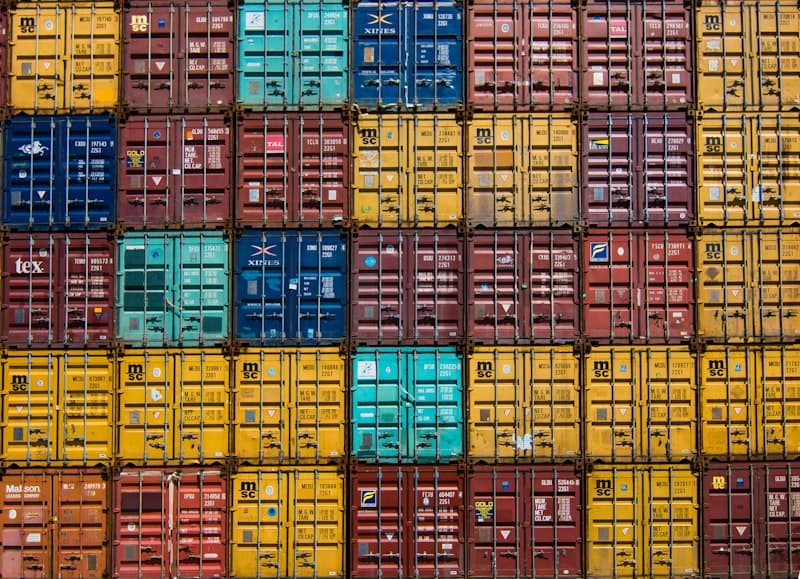
The Bangladesh-UAE trade corridor is quietly becoming one of the most consequential bilateral relationships in the global economy. What began as a modest exchange of ready-made garments and petroleum products has evolved into a multi-layered economic partnership spanning logistics, real estate, food commodities, technology, and financial services. For businesses paying attention, this corridor offers a rare combination: high growth potential, improving infrastructure, and a policy environment increasingly oriented toward openness.
The Scale of the Opportunity
Bangladesh has established itself as the world's second-largest ready-made garment exporter, a position built over decades of manufacturing investment, workforce development, and export-oriented policy. The UAE, meanwhile, has positioned itself as the premier re-export and logistics hub connecting South Asia, Africa, Europe, and the Gulf. These two economic identities are naturally complementary — and trade figures are beginning to reflect that alignment.
Bilateral trade between Bangladesh and the UAE has grown steadily over the past five years, with the UAE emerging as one of Bangladesh's top five trading partners. Bangladeshi exports to the UAE include garments, leather goods, jute products, and frozen food, while UAE exports to Bangladesh are dominated by petroleum, gold, and chemicals. But beyond goods, the relationship is increasingly defined by services: remittances from the approximately one million Bangladeshi workers in the UAE represent a significant financial flow, and investment linkages are deepening.
What Is Driving Growth Now
Several converging forces are accelerating the pace of trade between the two countries. First, Bangladesh's graduation from Least Developed Country (LDC) status — expected in the mid-2020s — is prompting exporters and importers on both sides to reconfigure their strategies. Companies that previously benefited from preferential duty arrangements are restructuring their supply chains, while new entrants are looking to establish positions before the transition is complete.
Second, the UAE's economic diversification agenda under its long-term development vision has created new demand for construction materials, food imports, and professional services — sectors where Bangladesh has growing capacity. As the UAE continues to build out its infrastructure and hospitality sectors, Bangladeshi suppliers of cement, ceramics, and processed food are finding new market access.
Third, direct shipping route improvements have materially reduced transit times and costs. Historically, cargo between Chittagong and Dubai moved through intermediate ports, adding time, cost, and coordination complexity. Improved direct connectivity is changing that calculus and making smaller shipments more commercially viable.
The Role of the Bangladeshi Diaspora
One of the most underappreciated drivers of Bangladesh-UAE trade is the role of the diaspora as both a commercial bridge and a consumer base. Bangladeshi entrepreneurs operating businesses in Dubai and Abu Dhabi serve as natural importers of Bangladeshi goods — food products, ethnic wear, beauty items — while also facilitating introductions between Bangladeshi manufacturers and UAE-based buyers. This informal commercial network has been operating for decades, but it is now being formalized through trade associations, government-to-government agreements, and structured investment vehicles.
The diaspora also drives remittance flows that strengthen household incomes in Bangladesh, increasing domestic consumption capacity and creating demand for imported goods — including those that enter via UAE re-export channels. This circular economic dynamic is one reason why the corridor continues to grow even during periods of global trade uncertainty.
Challenges That Remain
Despite the positive trajectory, businesses operating on this corridor face real and persistent challenges. Trade finance access for smaller Bangladeshi exporters remains constrained. Documentation and compliance requirements on both sides can be complex, particularly for companies without established legal and logistics support. Product quality certification processes, while improving, still create bottlenecks for food and pharmaceutical exports. And while Chittagong port capacity has expanded significantly, congestion during peak seasons continues to affect reliability.
Currency risk management is another consideration. Transactions between Bangladesh and the UAE are typically denominated in US dollars, insulating both parties from bilateral exchange rate volatility, but Bangladeshi businesses that carry USD obligations against BDT-denominated costs face exposure that requires active management.
How ParcelX Approaches This Corridor
At ParcelX Corporation, we work with businesses on both ends of the Bangladesh-UAE corridor — helping them understand not just the transactional mechanics of trade, but the strategic positioning required to operate sustainably over the long term. That means helping clients navigate compliance requirements, build relationships with the right counterparties, structure their logistics for reliability, and plan their commercial approach with realistic expectations about timelines and risks.
Our view is that the businesses that will benefit most from this corridor's growth are not necessarily the largest — they are the ones with the clearest strategy, the most reliable execution partners, and the patience to build market presence methodically rather than opportunistically.
Looking Ahead
The Bangladesh-UAE trade relationship is entering a new phase. Government-level engagement is deepening, infrastructure is improving, and the private sector on both sides is more aware of the opportunity than at any prior point. For businesses with relevant products, services, or capabilities, the question is no longer whether this corridor matters — it is how to position for it with precision and discipline.
The growth opportunities are real. So are the execution challenges. The businesses that will capture disproportionate value are the ones that treat both with equal seriousness — and build their operations accordingly. ParcelX Corporation exists to help them do exactly that.